
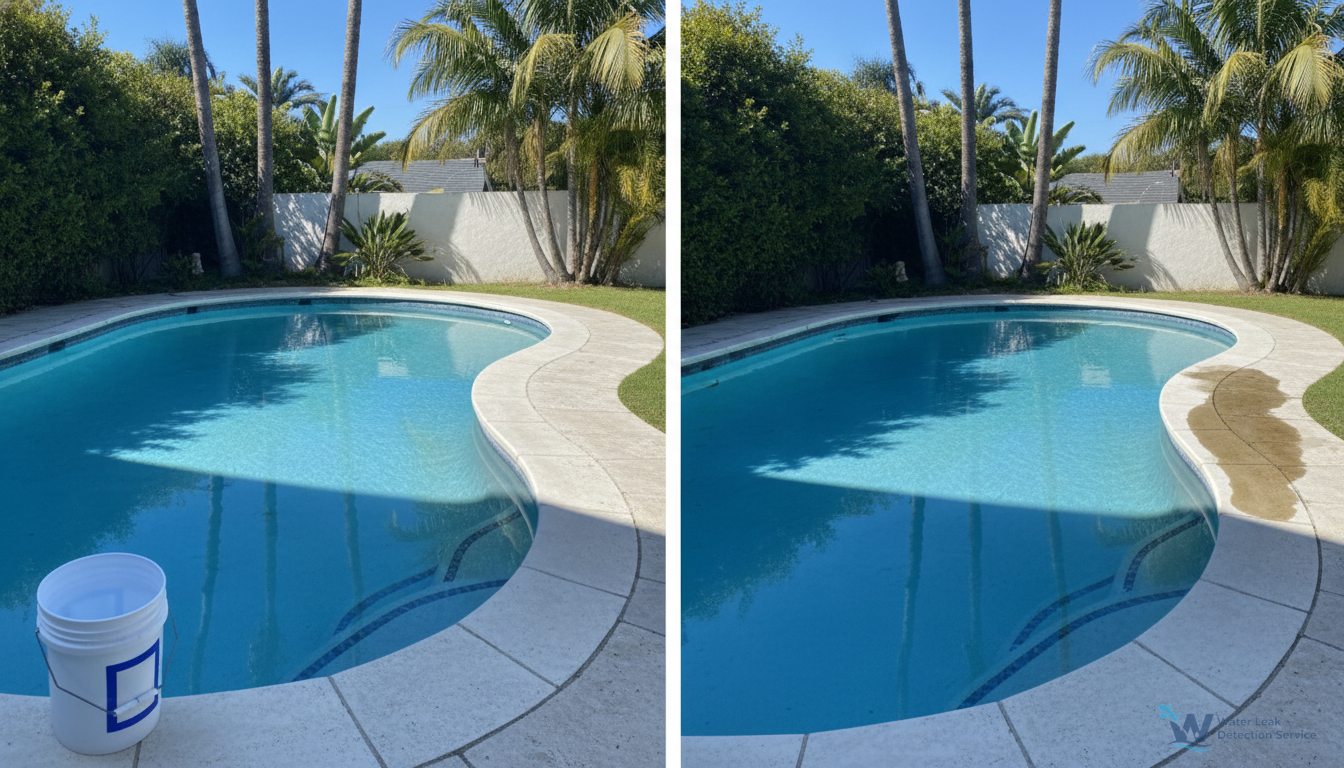
How Much Water Loss Is Normal for a West Hollywood Pool?
West Hollywood sits in the heart of the Los Angeles basin, where dry summers, warm winds, and strong afternoon sun can evaporate water from an uncovered pool surface. Under typical Southern California conditions, a residential pool may lose up to a quarter-inch of water per day through evaporation alone. That sounds like a lot, but it is entirely normal — especially during July and August when temperatures climb and low humidity accelerates surface moisture loss.
The problem is that a leaking pool can mimic evaporation loss so closely that many homeowners go months — sometimes an entire season — without realizing a structural or plumbing issue is draining their water and running up their utility bills. Once daily loss exceeds that quarter-inch threshold, the odds shift strongly toward a real leak.
The Bucket Test: Your First Diagnostic Step
Before calling anyone, perform a simple bucket test to get a baseline reading:
- Fill a five-gallon bucket with pool water and place it on the first or second step of your pool so it sits partially submerged.
- Use a piece of tape or a marker to mark the water level inside the bucket and the pool water level on the outside of the bucket at the same time.
- Leave the pump running on its normal schedule and check both marks after exactly 24 hours.
- If the pool level dropped significantly more than the bucket level, you almost certainly have a leak rather than evaporation.
This test accounts for evaporation automatically because both the bucket and the pool surface are exposed to the same air temperature, wind, and sun. Equal loss means evaporation. Unequal loss points to a leak.
Common Sources of Pool Leaks in West Hollywood
West Hollywood and the surrounding Los Angeles foothills have a specific set of conditions that accelerate pool leaks. Aging gunite shells, expansive clay soils, and the occasional seismic tremor all put stress on pool structures that were often built decades ago. The most frequent leak locations our technicians find include:
- Skimmer throat and neck connection: The plastic skimmer body gradually separates from the surrounding gunite as the soil shifts, creating a gap where water bypasses the plumbing and drains directly into the ground. Learn more about our skimmer and return fitting leak repair service.
- Shell cracks: Hairline fractures in gunite or plaster surfaces can allow significant water loss over time, particularly when they penetrate through the shell wall. Our pool shell crack detection and sealing service identifies which cracks are actively leaking versus which are cosmetic.
- Underground plumbing lines: Buried PVC supply and return lines degrade at glued joints, especially after years of soil movement. Our underground pool plumbing leak detection service locates these failures without wide-area excavation.
- Equipment pad connections: Union fittings, pump lid o-rings, and filter tank seals on your equipment pad can weep water continuously without being immediately obvious. See our equipment pad leak detection service for details.
Why Early Detection Saves Thousands of Dollars
A pool losing half an inch of water per day is losing roughly 150 to 200 gallons every 24 hours depending on pool size. Over a month, that is 4,500 to 6,000 gallons — enough to add meaningfully to your water bill and trigger drought-surcharge penalties under current Los Angeles Department of Water and Power rate structures. Over a year, an undetected underground leak can wash out the compacted soil beneath your pool shell, leading to settlement, additional cracking, and potentially significant structural repairs that dwarf the original diagnostic cost.
The sooner a leak is confirmed and located, the narrower and less expensive the repair scope will be. That is true whether the problem is a failed skimmer neck seal or a fractured underground return line beneath a concrete deck.
What a Professional Pool Leak Detection Appointment Looks Like
When you schedule a pool leak detection appointment with Water Leak Detection Service in West Hollywood, our technicians arrive with pressure testing equipment, acoustic listening devices, and dye injection syringes. The typical diagnostic process follows this sequence:
- Visual inspection of the shell, fittings, skimmers, returns, and equipment pad while the pool is running and again with the pump off.
- Dye testing at suspected leak points — a small amount of non-staining dye is introduced near a fitting or crack, and its movement (or lack thereof) reveals whether water is being drawn through that location.
- Pressure testing of individual plumbing circuits using rubber expansion plugs and a calibrated pressure pump. Each line is tested separately so the exact failing circuit is identified.
- Electronic acoustic detection along underground plumbing routes when a buried line shows pressure loss.
- A written report with photographs documenting every finding before the technicians leave your property.
Most West Hollywood residential pool inspections take between two and four hours depending on pool size and plumbing complexity.
Serving West Hollywood and Nearby Communities
Water Leak Detection Service is based at 8000 W Sunset Blvd, Suite B310 in West Hollywood and serves residential and commercial pools throughout the area seven days a week from 8 AM to 6 PM. We also serve neighboring communities including Beverly Hills, Hollywood Hills, Studio City, and Westwood.
If your pool is losing more water than you can explain, do not wait another week to find out why. Call us at +1 (213) 444-5632 or email [email protected] to schedule a same-week inspection.
Need Service?
Call +12134445632 or fill out our online form for a free, no-obligation quote.
Request Free Quote